Itinerante is an academic project developed at University of Sao Paulo (USP) for the courses ‘PRO3611 Feasibility and Project Management in Design’ and ‘AUT2514 Regulation, technical standards and professional ethics’. For this project we were asking ourselves: How can we use design to build a human centric, smart and accessible city? To answer this question we started doing desk research on demographic data and local legislation regarding accessibility in Sao Paulo, Brasil. We also observed how is the experience of people with disabilities using the public transportation in Sao Paulo and mapped the painpoints we observed throughout the user journey.


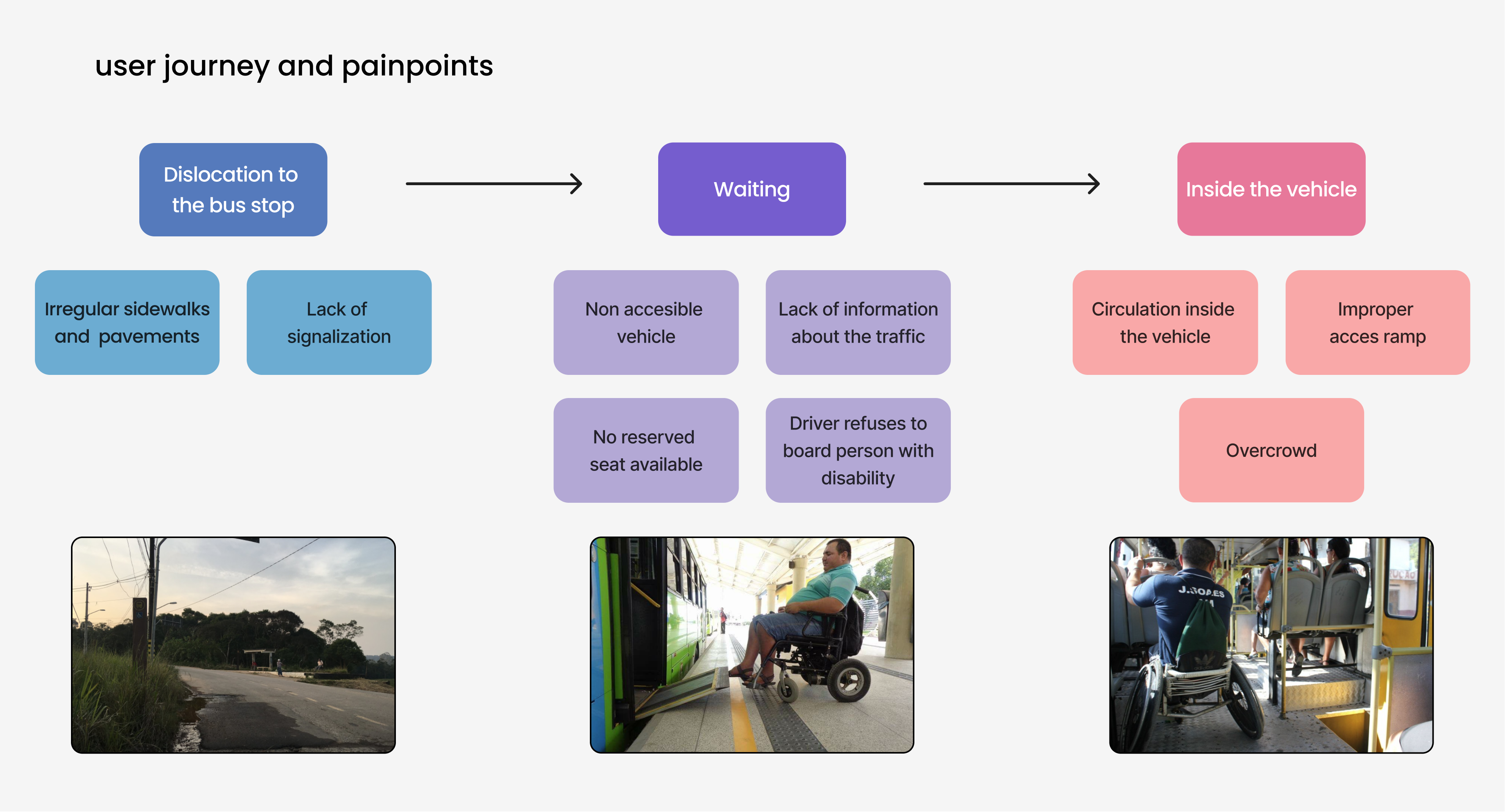
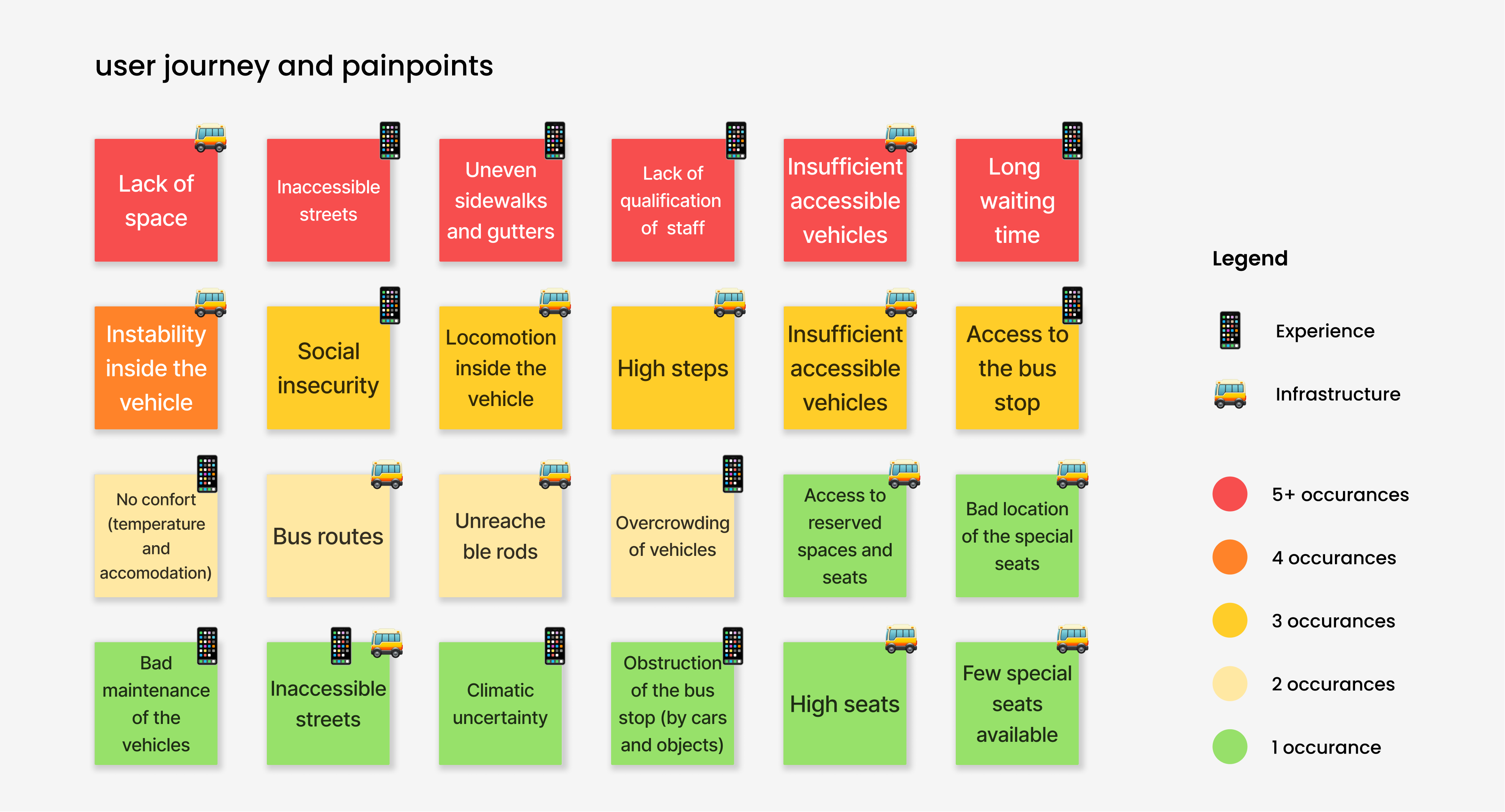
To validate the hypothesis we raised and better understand the users pains and needs, I conducted interviews with 18 people with mobility disabilities that live in the city of Sao Paulo. Among the respondants 93,8% agreed that they face difficulties when using the public transportation system (the other 6,2% don’t use the public transportation at all) it was shown that public transportationis not their main mean of transportation, being car (individual and shared) the most used among the respondents. We also got a wider perspective of the pains they face on their daily commuting journey, and mapped those pain points in two categories: infrastructure and experience. After this analysis we defined the project requirements.


To delivery an adequate solution for the users, the team had to act on those two fronts: infrastructure, with a new layout for vehicles and stops; and experience, with a transportation app and a collaborative report to empower the user in the city. The new layout optimized the circulation flow inside the vehicle, with new retractable seats and accessible rods. The accessibility report crosses geo referenced data from the city, with a collaborative database that maps out the citizen reports of accessibility issues found on the city. The users can report and underpin the ones that are more critical in order to push public efforts on the the most critical complaints. From this database, the app is able to provide tailor made routes, considering the user's specific needs and limitations crossed with dinamic, instant information about the paths and vehicles used.
To validate our value proposition, we built a landing page to evaluete the intrest of our target users in the service proposed. The landing page circulated on social media groups for people with reduced mobility for 2 weeks, and we had a conversion rate of 25%. With this optimistic result on our concept, we started discussing the product strategy, possible business models and partners to enable the project. The project started from a team of 5 designers and will need professionals from different backgrounds to continue growing, feedbacks and collaborations are very appreciated, stay tuned for poossible uptades.