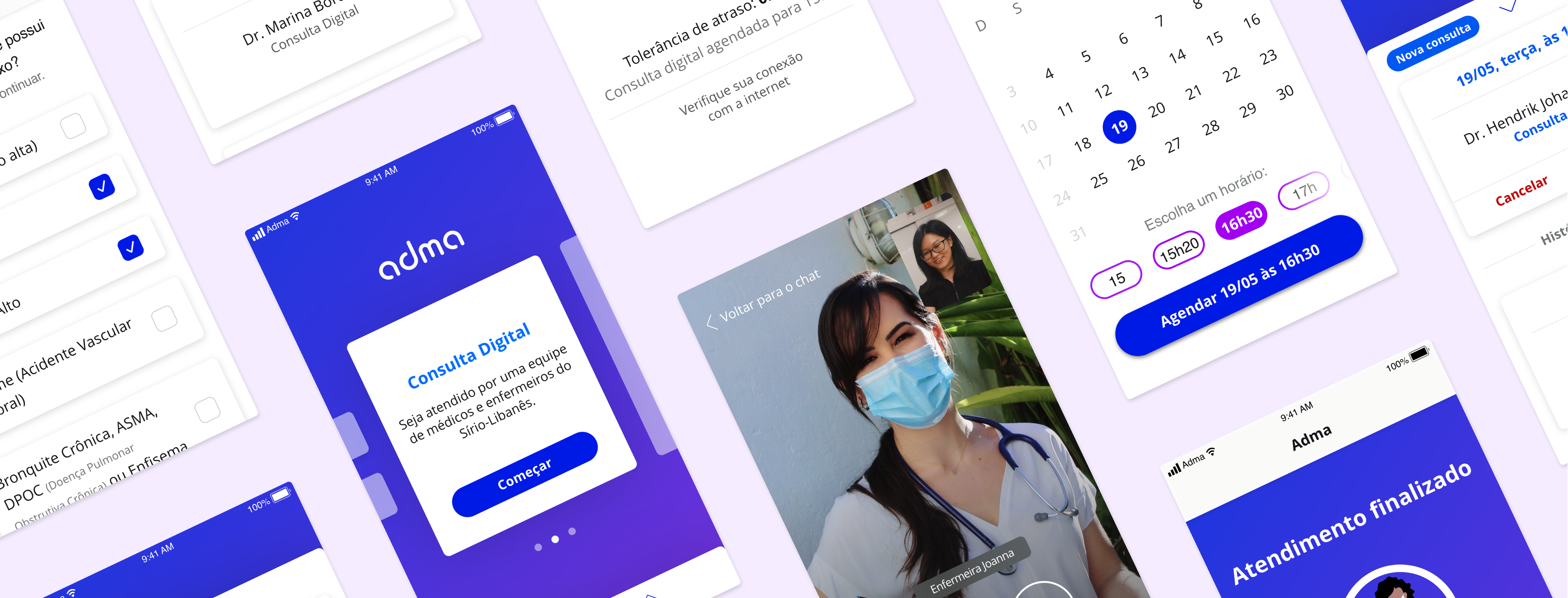
In early 2020, I had the opportunity to do an internship at Sirio Libanês Hospital – one of the most important Hospitals in Latin America, designing patient centric digital products to bring innovation to the high quality care that is offered by the institution. Adma is a telemedicine product that connects patients with physicians and nurses for primary care through family medicine. Family medicine is a speciality that provides continuing and comprehensive health care for the patients focused on disease prevention and health promotion rather than only treating symptoms. Our goal with Adma was to simplify the access to high quality health care and help the patients better understand how to navigate the healthcare system.





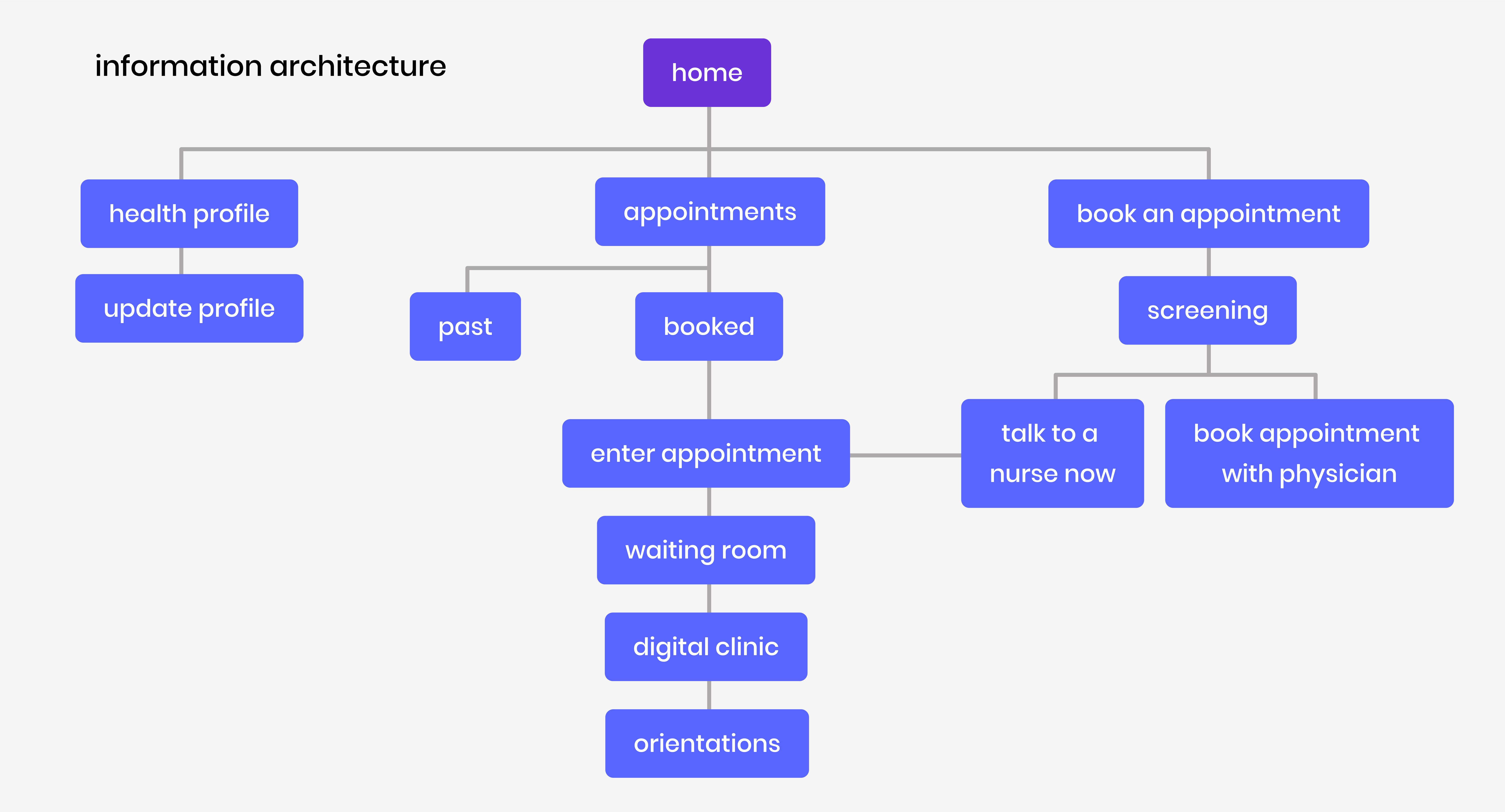
The care offered on Adma is based on Family Medicine, which is a speciality that provides continuing and comprehensive health care for the patients focused on disease prevention and health promotion rather than only treating symptoms. On the onboarding, the patient can fill out a Health profile, to give the health team some information about the health status and other important information for an assertive treatment. To make an appointment, the patient must go through a screening to be referred to the most suitable health worker, according to their needs at the moment. The consultation can be done via chat or video call and the follow ups are given to the patient right after the consultation ends.
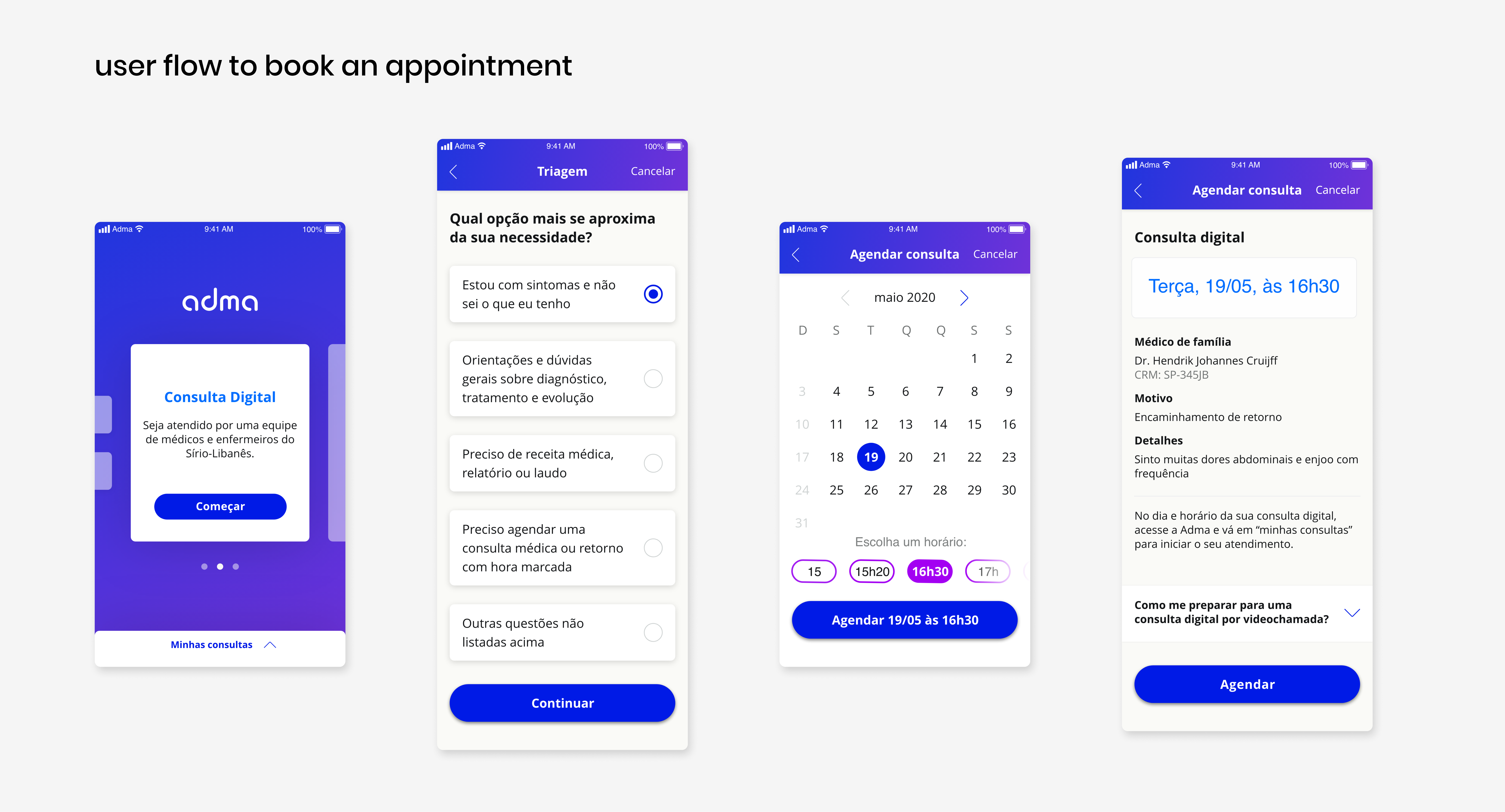
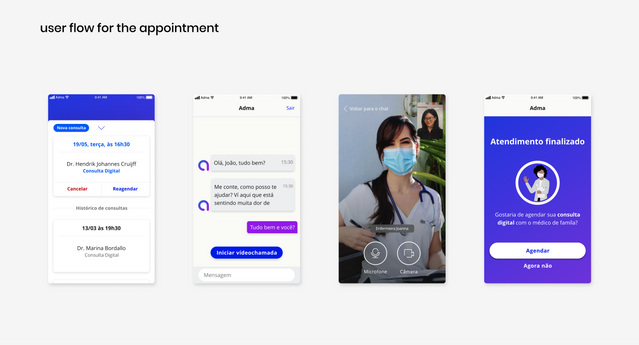
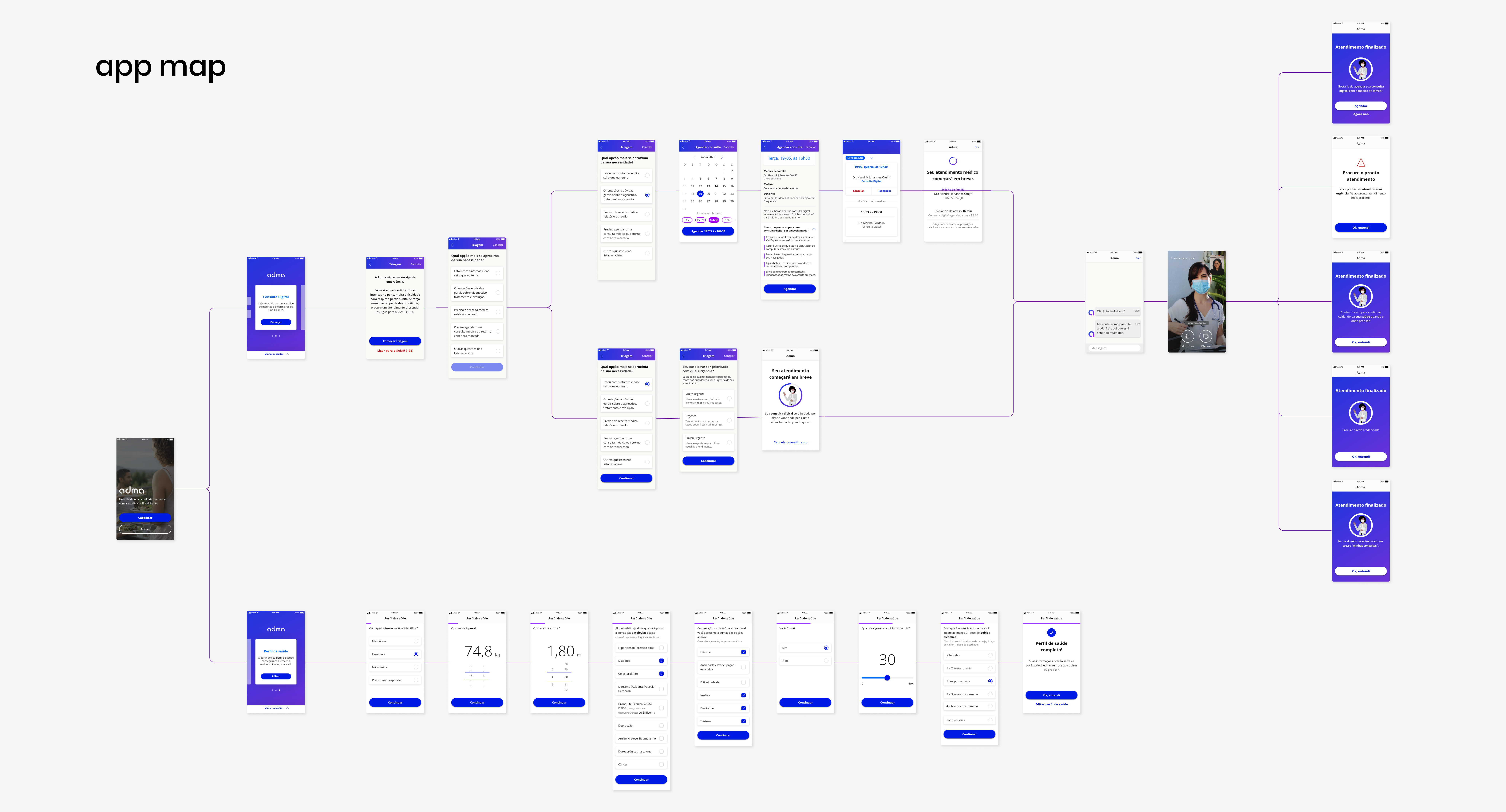
One of the biggest challenges we had to overcome on this project was a predefined business rule that the service needed to adapt to the pre existing hospital workflow and the staff working hours. We chose to be transparent with our users about the working hours, but we were worried it would be a huge letdown for the users. So we did research to understand if the experience we designed was comprehensive and easy to use for the patients. Some of the findings are summarized below.The screening flow is confusing for the users, it isn't clear for them which kind of health worker will assist them, and why; When users access adma they expect immediate medical assistance, but since this information is shown right in the beginning of the screening process it's not a letdown;We need a better integration with the prescription systems to improve the follow ups;
My internship ended before Adma was released to the general public, when I left we were alpha testing the product, mapping the corrections and improvements that needed to be made before the official release and preparing the backlog for future versions. This was my first time working as a product designer, I learned a lot about agile, product management and UX Design. After this experience I knew I wanted to pursue a career in Product, using design as a tool for business to create meaningful and pleasuable experiences for users.